Central Louisiana Gardening Calendar: Zones and Plant Dates
Central Louisiana gardeners have to balance lingering cold, fast-warming soil, humid summer heat, heavy rain, and an autumn growing season that can vary from year to year. A useful planting calendar is therefore a set of flexible windows, not a list of fixed dates. This guide explains how to plan spring, summer, and fall crops around local conditions and your own yard.
How to use a Central Louisiana planting calendar
Central Louisiana covers a broad area, and gardens within it do not all warm, drain, or cool at the same pace. A low spot may stay wet and cold after a sunnier, better-drained bed is ready to plant. A sheltered urban garden may have a longer workable season than an exposed rural plot nearby. Use seasonal windows as a starting point, then adjust them to the conditions where you garden.
It also helps to separate two kinds of timing. A frost window helps you decide when a crop may be exposed outdoors without cold injury. Soil warmth helps determine when seeds will sprout and roots will grow well. Those are related, but they are not interchangeable. A warm-season crop can struggle in cold, wet soil even after the threat of a damaging frost has passed.
For a closer look at how the region fits into statewide timing, see Central Louisiana Spring Planting: Using North Region Cutoffs. That approach is useful when you need a cautious spring starting point, but it still needs to be adjusted for your particular site and the weather each year.
Before deciding what to sow, check four things:
- Your location and exposure. A garden near a building, in a hollow, or on an open slope may experience different temperatures and wind.
- The soil’s condition. Soil that is saturated, sticky, or easily compacted is not ready for tilling or planting just because a calendar says spring has arrived.
- The crop’s needs. Cool-season crops can tolerate conditions that would stall warm-season crops.
- The forecast and recent weather. A mild spell does not guarantee that cold weather is finished. Conversely, a warm day does not mean the soil has warmed evenly.
A planting date should be treated as a decision point rather than a deadline. If a spring cold snap is forecast, delay tender transplants or prepare to protect them. If heavy rain has left beds waterlogged, wait until they are workable. If fall crops are behind schedule, choose crops and varieties that can mature within the time you have left rather than relying on a calendar date alone.
What hardiness zones and frost dates can tell you
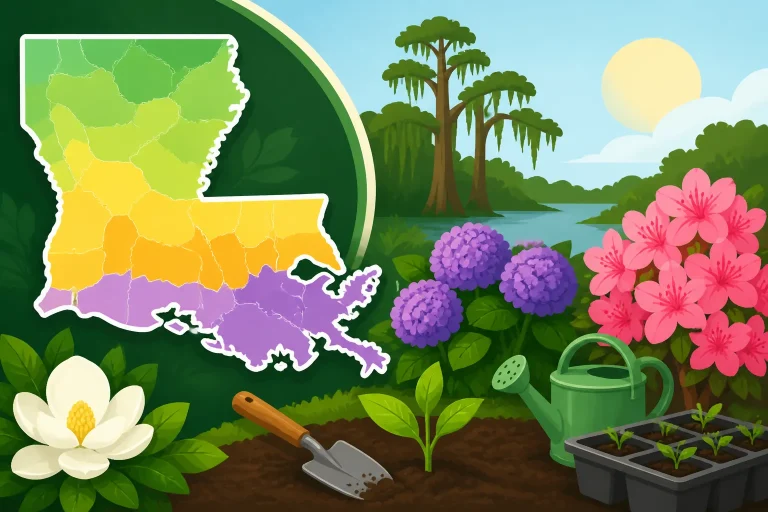
Hardiness zones and frost dates help answer different questions. The USDA Plant Hardiness Zone Map describes how cold an area typically gets in winter and can help you judge whether perennial plants are likely to survive winter. ZIP codes or areas fall in a zone on the map, but a zone is not a specific planting date. For background on using the map, see Louisiana USDA Hardiness Zones: Maps, Ranges, and ZIP Codes.
Frost dates are estimates based on weather records, not appointments that the weather must keep. A date with a stated probability describes the chance of a temperature event occurring by that date over the record period. It does not promise that frost will occur then or that it will not occur afterward. The relevant station and probability matter, so look for records that best match your location rather than assuming one regional date applies everywhere. Local Freeze Windows: Tracking Frost Dates Across Louisiana Stations explains why nearby weather stations can produce different planning windows.
| Planning tool | What it helps you judge | What it does not tell you |
|---|---|---|
| Hardiness zone | Whether a perennial may tolerate typical winter minimum temperatures | The right day to sow vegetables or set out tender transplants |
| Frost probability | How likely a frost or freeze is within a period around a station | Whether your individual garden will have the same conditions |
| Soil condition | Whether a bed is workable and suitable for roots and seeds | Whether a tender crop is safe from a future cold snap |
| Forecast | Short-term risks such as cold, heat, or heavy rain | The full season’s weather pattern |
| Crop maturity information | How long a crop may take to produce under stated conditions | A guaranteed harvest date in a variable garden |
For annual vegetables, frost probability is only part of the decision. A tomato transplant can be damaged by cold, but it can also sit without growing in soil that remains too cool. Beans may fail to emerge reliably if sown before the soil is warm enough. Okra and other heat-loving crops need warmth rather than merely the absence of frost.
A practical way to use the information is to start with the regional seasonal window, compare it with a nearby station’s freeze information, then check the forecast and your garden. For plants that cannot tolerate cold, allow a margin instead of aiming for the earliest possible day. To understand how these probabilities can guide a planting decision, see Using Freeze Odds to Choose Planting Dates Across Louisiana Stations.
Spring planting: work from cool-season crops toward tender crops
Spring is not one planting window. It is a progression from crops that tolerate cool conditions to crops that need warm air and soil. Planting everything as soon as the weather turns pleasant can leave warm-season vegetables sitting still through cold nights or wet conditions. Waiting until all cold risk has passed before planting anything, on the other hand, can waste useful weeks for hardy crops.
Late winter into early spring
As winter begins to ease, focus first on crops that can germinate and grow in cool weather. Leafy greens and root crops are common choices for this part of the season. They can be sown or planted before tender vegetables, provided the bed is not waterlogged and the soil can be prepared without damaging its structure.
Direct sowing works well for crops that establish readily in place. It avoids transplant shock and lets roots develop without disturbance. Transplants can be helpful when you want to shorten the time a crop spends in the bed, but newly set plants still need suitable conditions and protection from sharp temperature changes.
Before sowing, remove weeds and loosen only the soil that needs it. If the bed is wet enough to smear, clump heavily, or compact underfoot, give it time to drain. Working saturated soil can leave a persistent hard layer that makes it more difficult for roots and water to move through the bed.
For specific options that tolerate cool conditions, use Vegetables to Plant Before the Final Spring Freeze and Cool-Season Veggies That Handle Light Frost in Early Spring. These references can help you distinguish crops suited to an early window from those that need more warmth.
Mid-spring: transition, don’t switch all at once
As conditions warm, keep some cool-season crops going while you begin preparing for warm-season vegetables. A gradual transition can extend harvests and reduce the risk of having every bed depend on the same weather window. If a spring crop is nearing harvest, plan what will follow before clearing it out. A prepared bed is easier to replant promptly than one left vacant until the next season is already underway.
The best time to transplant tender crops depends on more than the calendar. Check that nights are becoming milder, the soil is warming, and the forecast does not point to a cold snap. Harden off seedlings raised indoors by gradually exposing them to outdoor conditions before setting them into a bed. Young plants that move directly from a protected indoor setting to full sun and wind may be stressed even when temperatures seem favorable.
Avoid crowding the planting window with too many seedlings at once. If space allows, sow or set a portion first and keep another portion for a later planting. That spreads the risk of weather damage and can spread harvests as well. When to Plant Spring Tomatoes and Peppers Across Louisiana offers crop-specific timing guidance for two popular but cold-sensitive vegetables.
Late spring: wait for warmth for heat-loving crops
Once the soil and nights are reliably warmer, shift attention to crops that grow best in heat. Beans, cucurbits, and other warm-season vegetables generally establish more reliably when planted into warm soil rather than a cold bed following an early warm spell. Heat lovers such as okra are especially poor candidates for rushing into cool ground.
For each crop, check whether direct sowing or transplanting makes more sense. Seeds such as beans and many cucurbits are commonly sown directly into the garden. Some crops benefit from transplants, but they need to be moved carefully and watered in. The guidance in When to Plant Louisiana Warm-Season Vegetables can help you organize the broad transition from spring crops to warm-season crops.
A simple spring sequence is:
- Prepare beds when the soil is workable, not merely when a warm day arrives.
- Sow cool-tolerant crops first.
- Watch local freeze information and the short-range forecast before setting out tender plants.
- Wait for warmer soil before sowing crops that dislike cold.
- Stagger later sowings where practical, so a single weather event does not determine the entire season’s harvest.
Summer planting: manage heat, moisture, and harvest gaps
Central Louisiana’s summer heat can make a garden less productive even when plants are technically still alive. High temperatures, humid conditions, sudden downpours, and dry stretches can all affect growth, flowering, and fruit set. Summer planting works best when you treat water, shade, drainage, and crop choice as parts of the calendar rather than problems to solve after plants struggle.
Keep beds productive without forcing a spring crop
Some spring vegetables decline as temperatures rise. When a crop becomes unproductive, remove it if it is no longer worth keeping, and clear diseased or badly damaged plant material. Do not assume that a failing spring planting will recover simply because it received more fertilizer or water. Heat-sensitive crops may be reaching the end of their useful season.
Use the opening in the bed deliberately. Depending on the season and how much time remains before autumn conditions, you might plant a heat-tolerant crop, start a short succession of a suitable vegetable, or allow the bed to rest under a protective cover or mulch. The best choice depends on the crop’s time to maturity, the bed’s moisture, and your capacity to keep it watered during hot weather.
If you are planning a second planting, check the expected days to maturity and count backward from the intended harvest period. Treat that estimate as approximate: temperature, sunlight, water, and variety all affect how quickly a crop develops. Succession Planting Bush Beans and Greens in Louisiana Gardens explains how to use repeat sowing to avoid a single, crowded harvest.
Give new plantings a better chance
Seeds and young transplants are more vulnerable to drying than established plants. Keep the seed zone evenly moist while seeds germinate, but avoid leaving the bed saturated. Once seedlings emerge, water in a way that supports root growth rather than keeping only the soil surface damp. The goal is consistent moisture, adjusted for rain, soil texture, bed height, and plant size.
Mulch can reduce moisture loss and help moderate soil temperature, but it should not be piled against stems or crowns. In a very wet spell, mulch and heavy watering may be counterproductive if the site already drains poorly. Check the soil before adding water; a dry surface does not always mean the root zone is dry.
Heat and afternoon sun can stress young crops even when their roots have adequate moisture. Consider temporary shade for vulnerable new plantings during the most intense part of the day, and avoid transplanting at the hottest point of a hot, bright day. Shade should not be treated as a substitute for proper soil moisture or a suitable crop choice.
If a bed repeatedly stays wet after rain, address drainage before making another planting. Raised rows, better-directed runoff, and changes to the planting location may help, depending on the yard. When Raised Beds and Drainage Channels Rescue Saturated Garden Plots covers situations where moving water is a more important fix than changing the sowing date.
Let the crop match the summer conditions
A calendar cannot make a cool-season vegetable thrive through sustained heat. Choose crops suited to the temperature range and season that remain, and be realistic about the likely harvest. Some vegetables may flower or set fruit poorly in intense heat, even if their leaves still look healthy. If a crop is producing poorly, consider whether heat, water stress, or disease is a more likely cause than a need for additional fertilizer.
Keep harvests moving. Pick vegetables at the stage you prefer and remove overripe or damaged fruit, which can attract pests and make it harder to spot new problems. Regular harvesting can also encourage continued production in crops that respond to it.
For summer details, Protecting Tomatoes and Peppers from Louisiana Summer Heat and Why Vegetable Gardens Slow Down in Midsummer Louisiana Heat address common challenges that affect both crop performance and planting decisions.
Fall planting: plan backward from the coming cold
Fall gardening often rewards careful planning, but the season can be easy to misjudge. Seeds started in hot conditions may struggle to establish, while crops planted too late may not mature before a cold snap. A useful fall plan starts with the expected harvest period and works backward, allowing for the crop’s maturity time and the local uncertainty around autumn temperatures.
Prepare beds before the best sowing window
A garden bed may be available after a spring or summer crop finishes, but it may not be ready for a new planting. Remove old crop debris, pull weeds, and check whether the soil is compacted or depleted of moisture. If the bed is dry and hard, moisten it before preparing the planting area. If it is saturated, wait for it to drain.
Heat can make germination difficult for some fall crops. Where conditions are hot, sowing into a prepared, moist bed and keeping the seed zone from drying out can help. A temporary cover that reduces harsh afternoon exposure may also help protect young seedlings, provided it does not trap excessive heat or prevent airflow. Remove or adjust protection as conditions change.
For the broad seasonal shift from summer vegetables to fall crops, see Louisiana Fall Gardening: Sowing Windows and First Freeze Dates. It is also useful to compare When to Plant Fall Vegetables Across North and South Louisiana when deciding how the timing changes across the state.
Estimate whether crops have time to mature
Read the seed packet or plant information for the days to maturity, noting whether the count begins at sowing or transplanting. Then consider the remaining growing conditions. A crop may take longer than expected if seedlings emerge slowly in hot soil, plants are stressed by drought, or cloudy weather limits growth.
Do not plan around a single predicted first-frost date. Use local freeze information as a probability, then leave a buffer for the possibility that cold arrives earlier than expected. The risk can be different from one part of Central Louisiana to another, and a sheltered bed may not match an open weather station.
A fall crop may still provide useful leaves or young roots even if it does not reach full size. Decide whether that smaller harvest would meet your needs before sowing. If full-sized produce is the goal, choose crops with a maturity period that fits the available window and avoid filling every bed with a late planting that has little margin.
Prioritize reliable crops and protect harvests thoughtfully
Leafy vegetables and root crops are common fall choices because many tolerate cooler conditions better than summer vegetables. Plant them in a sequence that suits your household’s harvest needs. One sowing may produce more at once than you can use, while several smaller sowings can spread production.
Keep an eye on the forecast as the season cools. If cold weather threatens, harvest crops that are ready and protect vulnerable plants when practical. Protection can reduce exposure, but it is not a guarantee against a severe or prolonged cold event. Use suitable covers securely and remove or open them when conditions warm to avoid overheating.
For root crops and alliums, timing and soil conditions influence both establishment and the eventual harvest. The guides When to Plant Fall Root Crops and Alliums in Louisiana and When to Sow Carrots, Beets, and Radishes in Louisiana offer more focused planning help.
Build a calendar around your beds, not just the region
A regional calendar is a useful framework, but a garden journal turns it into a practical tool for your own yard. You do not need elaborate records. Note when you sowed or transplanted, how the weather behaved, when germination began, and when you started harvesting. Add observations about wet spots, shade, pest pressure, or a bed that warms slowly.
After a few seasons, those notes can reveal patterns the regional guidance cannot. You may find that one bed is ready earlier because it drains well and gets morning sun, while another stays cold or saturated. That difference can matter more than a small adjustment to a generic planting window.
Track results in a simple table:
| Record | What to note | How it improves next season |
|---|---|---|
| Planting event | Crop, sowing or transplanting, and approximate date | Shows which windows worked on your site |
| Emergence or establishment | Whether germination was even and plants settled in | Helps identify cold, heat, moisture, or seedbed problems |
| Weather | Cold snaps, hot spells, heavy rain, or dry periods | Puts successes and failures in context |
| Harvest | First harvest, peak production, and when production slowed | Helps plan succession and crop replacement |
| Bed conditions | Drainage, shade, soil surface, and water needs | Helps match crops to locations and improve preparation |
Use these notes to make modest changes rather than rewriting the whole plan after one poor season. A late frost, unusually wet period, or hot spell can distort results. Look for repeated patterns across more than one planting before deciding that a particular crop or window does not suit your garden.
Plan crop succession before a bed is empty. If you know what should follow a spring crop, you can prepare seed or transplants in advance and replant while the bed is still in good condition. Rotation can also help avoid growing the same crop family in the same spot repeatedly, especially when diseases have been a problem.
Keep a few flexible beds or small planting areas. A strict calendar with every bed committed months ahead can be hard to adapt when a crop fails or weather shifts. Leaving room to replant lets you respond to the season without disturbing crops that are already producing.
A practical seasonal checklist for Central Louisiana
A useful calendar is one you can act on. The checklist below keeps the decisions in sequence while leaving room for local weather and yard conditions.
Before spring planting
- Check local freeze information and the forecast, but treat frost dates as probabilities rather than guarantees.
- Inspect beds for standing water, compaction, and runoff.
- Prepare the earliest areas for cool-season crops first.
- Start tender seedlings with enough time to harden them off before transplanting.
- Make a plan for what will replace spring crops as temperatures rise.
During the spring transition
- Sow or set cool-tolerant crops while conditions suit them.
- Delay tender transplants if a cold snap is forecast or the soil remains cold and wet.
- Wait for warm soil before planting heat-loving crops.
- Use staggered sowings when you want a longer harvest or a backup planting.
- Keep newly planted beds evenly moist without leaving them waterlogged.
During summer
- Remove crops that have stopped producing or are badly affected by disease.
- Check the root zone before watering; do not rely only on the appearance of the soil surface.
- Protect young seedlings and transplants from intense sun and drying.
- Choose new crops based on the heat and the time remaining before fall.
- Prepare fall beds before the best sowing window arrives.
During fall
- Work backward from the intended harvest using the crop’s maturity information.
- Allow a margin for variable weather and the possibility of an earlier cold snap.
- Keep fall seedbeds moist while seedlings establish.
- Harvest ready crops before damaging cold when practical.
- Record what matured on time and what needed a longer season.
The central idea is flexibility. Use regional guidance to identify the likely order of planting, then make each decision from the soil, crop needs, forecast, and conditions in your own garden. A calendar can help you avoid obvious timing mistakes, but observation is what makes it fit your yard.
Frequently Asked Questions
Is there one planting date for all of Central Louisiana?
No. Conditions vary across the region and from one garden to another. Use seasonal windows, nearby freeze information, the forecast, and the soil condition at your site rather than relying on a single date.
Does a USDA hardiness zone tell me when to plant vegetables?
No. A hardiness zone helps assess winter survival for perennial plants. Vegetable planting depends on factors such as frost risk, soil warmth, crop tolerance, and local weather.
Should I plant warm-season vegetables during the first warm spell?
Not automatically. A warm afternoon does not mean nights or soil are consistently warm. Wait for suitable conditions for the crop, and check the forecast before setting out tender plants.
Can I plant fall crops as soon as summer crops finish?
You can prepare the bed, but the timing should match the crop’s needs and the time remaining before colder weather. Check maturity information, local freeze probabilities, and the condition of the seedbed before sowing.
Disclaimer
This article is for general informational purposes only and does not constitute professional advice. Laws, prices and regulations vary by location and change over time. Consult a qualified professional for guidance on your specific situation. Louisiana Gardening Guide is not a government agency and is not affiliated with any university extension, state department of agriculture or other government agency.