Louisiana Fall Gardening: Sowing Windows and First Freeze Dates
Louisiana fall gardening is a timing puzzle: summer heat can stress new seedlings, but waiting too long may leave crops short of the cool weather they need to mature. The best sowing window depends on your region, your local first-freeze odds, and each crop’s days to maturity. Here’s how to plan around those factors and make sensible adjustments when the forecast changes.
Why fall sowing depends on more than a calendar date
A fall garden is not simply a spring garden shifted by six months. In late summer, Louisiana gardeners are often planting into hot soil and warm nights, even as the days begin to shorten. Those conditions affect seed germination, seedling survival, crop development, and the time available before cold weather slows growth.
The key planning point is to work backward from the conditions a crop needs at maturity. Many cool-season vegetables establish best as summer heat eases and then produce through mild autumn weather. Some tolerate a light frost; others are damaged by a freeze. A crop that can handle cold later in its life may still struggle to germinate or establish in hot, dry soil.
A first-freeze date is useful, but it is not a promise. It is a probability based on records from a weather station or period. The date can vary from year to year, and your garden may not match the station exactly. A low-lying, exposed bed may cool differently from a protected yard near a building. For that reason, use the date as a planning reference, not a deadline you can count on.
Planning backward also has limits. Days to maturity are estimates, usually based on growing conditions that may differ from a Louisiana garden in late summer. A plant growing through heat, drought, saturated soil, pest pressure, or short autumn days may take longer to reach harvest than the label suggests. Add a little flexibility rather than scheduling every crop to finish just before a predicted freeze.
For a broader regional starting point, compare the guidance in Louisiana Fall Vegetable Garden: Planting Between Summer and Frost and Annual Louisiana Planting Calendar: Frost Windows and Sowing Cycles. Then adapt the calendar to your parish, your garden’s exposure, and the specific crop you plan to grow.
It helps to separate three milestones:
- Sowing or transplanting: The crop must get started while conditions support germination or establishment.
- Expected maturity: The crop needs enough favorable growing time to reach a useful harvest stage.
- Cold tolerance: The crop may continue through light frost, slow down in cold weather, or be damaged by a freeze, depending on the crop and its stage.
These milestones are related, but they are not interchangeable. A hardy crop may tolerate cool weather once established but still need protection from extreme heat as a seedling. A tender crop may grow quickly in warm weather yet need to be harvested before a cold snap. Keeping those distinctions in mind prevents a common planning mistake: choosing a planting date based only on when the first freeze might occur.
How Louisiana’s regions change the fall window
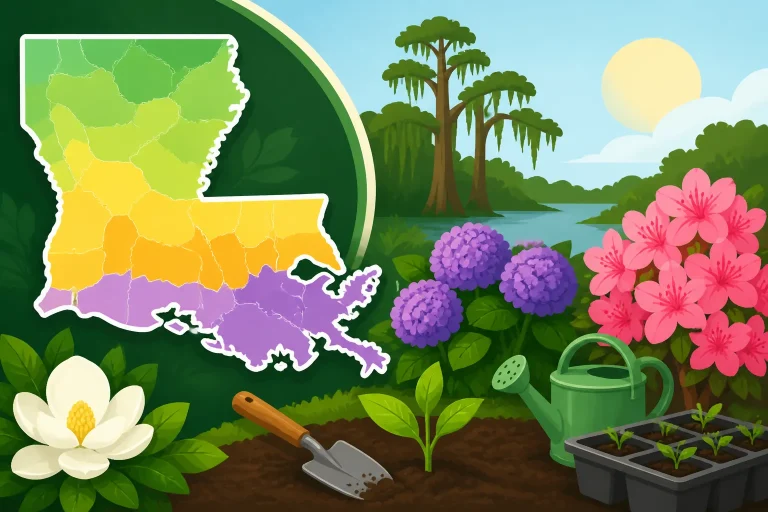
Louisiana’s geography creates meaningful differences in autumn conditions. Inland and northern areas generally face colder weather earlier than the Gulf Coast, while southern and coastal gardens may remain warm later into the season. Those broad patterns are useful, but a regional label cannot replace local weather records or observations.
The most practical approach is to start with a regional calendar and then refine it. A calendar for North Louisiana can help frame an inland plan; a coastal calendar can offer a better starting point for a warmer location. If your garden sits between those broad regions, use the closer local weather station and pay attention to how your yard behaves in cold, wet, or windy weather.
| Garden location | What to account for | Practical planning approach |
|---|---|---|
| North Louisiana and colder inland sites | Cold weather may arrive earlier, reducing the time available for slow-maturing crops | Favor crops that can finish in the available window, and avoid relying on a late, mild autumn |
| Central Louisiana | Conditions can vary with distance from the coast, elevation, and local exposure | Use a regional calendar as a starting point, then check local station records and garden microclimates |
| South Louisiana and coastal sites | Warm weather may persist later, but heat and humidity can complicate early establishment | Start suitable crops as conditions permit, and do not assume that a long warm season eliminates cold risk |
| Sheltered or urban gardens | Buildings, walls, trees, and surrounding surfaces can affect exposure and temperature | Use your own observations alongside regional data; protection can help, but it does not guarantee a crop will avoid damage |
| Open or low-lying gardens | Wind exposure, cold-air pooling, and wet soil may increase stress | Plan conservatively and give priority to drainage, airflow, and timely harvest |
These are working categories, not hard boundaries. A garden in one parish can behave differently from another because of slope, soil drainage, wind exposure, shade, and nearby structures. Even within a yard, a raised bed against a sunny wall may remain warmer than an open bed in a low spot.
Use the local calendar that best fits your location, but check what the calendar means by its dates. Some recommendations are based on a typical sowing window; others relate to freeze probabilities or a target harvest. If the underlying reference is unclear, treat the date as a broad guide rather than a guarantee.
Useful regional references include North Louisiana Planting Calendar and Hardiness Zones, Central Louisiana Gardening Calendar: Zones and Plant Dates, and South Louisiana and Coastal Planting Calendar: Zones 9A to 10A. For a more detailed look at how dates shift between regions, see How Fall Sowing Dates Shift Across Louisiana Climate Regions.
The amount of time between sowing and the first freeze is only one part of the calculation. A crop may stop growing well before a hard freeze if temperatures turn cool enough to slow it down. Conversely, a cool-tolerant crop may continue to produce after a light frost. Consider the likely sequence of weather, not just a single date on a calendar.
What to plant, and when to start planning
Fall crops do not all belong in the ground at the same time. The best window depends on whether a plant grows quickly or slowly, whether it is started from seed or a transplant, and how it responds to heat and cold. Instead of treating “fall vegetables” as one group, sort crops by how they grow and what conditions they need.
Quick crops and repeat sowings
Some leafy greens and root crops can be planted in successive small batches rather than all at once. Staggered sowings can spread harvests and reduce the chance that a whole bed becomes ready at the same time. This can be especially useful when weather is unpredictable or when the household prefers smaller, regular harvests.
Quick-growing crops still need suitable establishment conditions. Seeds may not germinate reliably in very hot, dry soil, and young seedlings may wilt or bolt under stress. Prepare the bed first, make sure the seed zone stays evenly moist, and consider starting a smaller test sowing before committing the full bed.
The article When to Sow Carrots, Beets, and Radishes in Louisiana offers a crop-specific calendar for several direct-sown roots. For leafy crops, Fall Vegetable Direct-Seeding Windows for Louisiana Lettuce and When to Direct-Seed Cool-Season Leafy Crops from Autumn to Winter can help you compare sowing approaches.
Crops that need more time
A crop with a longer maturity estimate needs to be started earlier than a crop harvested young. Check the seed packet or transplant information for days to maturity and note what that number measures. It may refer to harvest from direct sowing, or it may be counted from transplanting. If you are unsure, look for the explanation on the packet or ask the seed provider.
Compare the maturity estimate with the time likely to remain before cold weather slows growth. Allow extra time for establishment and less-than-ideal conditions. If the calendar looks tight, choose a faster crop, use a healthy transplant where appropriate, or grow a smaller number of plants rather than sowing a full bed that may not mature.
For crop-specific comparisons, see Days to Harvest for Louisiana Fall Vegetable Crops and Will Your Autumn Crops Mature Before the First Louisiana Cold Snap?. These topics can help turn a general calendar into a decision about a particular crop.
Crops that tolerate cool weather
Cool-tolerant crops are often the backbone of a fall garden because they can keep growing as nights cool. Some may withstand light frost after establishment, while others are more sensitive. “Frost tolerant” does not mean immune to every cold event: plant age, wind, moisture, duration of exposure, and the difference between frost and a hard freeze all matter.
A crop that can endure cool weather may also have a better chance of continuing to produce after a brief cold spell. That makes it a reasonable choice where the autumn window is uncertain. Check crop-specific advice rather than assuming that all greens, roots, or members of a vegetable family have the same tolerance.
For a closer look at cold-tolerant choices, see Cool-Season Veggies That Handle Light Frost in Early Spring and When to Plant Fall Greens, Kale, and Collards in Louisiana. The spring article can help explain relative cold tolerance, but its planting schedule should not be used as an autumn calendar.
Crops that are sensitive to cold
Warm-season crops may still be possible in some fall gardens, especially where there is enough warm weather left for them to produce. But they are less forgiving of a late start, a cool spell, or an early freeze. Make sure the expected harvest fits the remaining warm period, and be ready to pick mature or nearly mature produce if a cold event is approaching.
A crop’s ability to set fruit in heat does not automatically make it a good late-season choice. It still needs suitable temperatures and enough time to flower, set, and develop produce. For tomatoes and peppers, use a regional planting calendar and compare the expected time to maturity with your local freeze risk. Will Fall Tomatoes and Peppers Mature Before Louisiana Frost? addresses that decision directly.
You can also use What to Plant Now: Starts vs Seeds to think through the trade-offs between direct sowing and buying transplants. Transplants can save establishment time, but they need to be healthy and well acclimated; seeds offer more choice and can avoid transplant shock, but may take longer to produce a harvest.
How to calculate a useful sowing window
A practical fall plan begins with the crop, not a generic date. Gather the crop’s maturity estimate, decide whether you will sow seed or set out a transplant, and identify the local weather reference that best fits your garden. Then work backward while leaving room for real-world delays.
- Choose a likely harvest target. Decide whether you want young leaves, mature roots, or full-sized fruit. A crop harvested young may need less time than the same crop grown to full size.
- Check how maturity is counted. Confirm whether the packet’s estimate starts at direct sowing or transplanting. Do not assume the two methods produce the same schedule.
- Identify a local first-freeze reference. Use a nearby weather station or a regionally appropriate calendar, and note that the date represents a probability rather than a fixed annual event.
- Work backward from expected maturity. Allow time for germination, establishment, and slower growth as days shorten and temperatures change.
- Add a margin for uncertain conditions. Heat, dry soil, heavy rain, pests, and poor establishment can all delay a crop. A narrow window is a reason to choose a quicker crop or a transplant, not a reason to expect ideal weather.
- Check cold tolerance and harvest flexibility. Ask whether the crop can remain in the garden through a light frost, whether it must be harvested before a freeze, and whether you can pick it early if the forecast changes.
- Review the plan as the season progresses. A forecast, a delay in planting, or a poor germination rate may call for a different crop in the next bed.
The calculation is a planning aid, not a promise. A seed packet’s maturity estimate does not predict the exact day your garden will produce, and a first-freeze probability does not say when a freeze will happen in a particular year. When the window is short, choose crops that can be harvested at more than one stage or that are suited to cool weather.
It can help to keep a simple planting record. Write down the sowing or transplant date, crop, bed location, germination or transplant condition, and first harvest. In later seasons, those notes can show whether your yard consistently runs warmer, colder, wetter, or slower than the regional calendar suggests.
For station-based freeze references, First and Last Freeze Dates at Louisiana Weather Stations and Local Freeze Windows: Tracking Frost Dates Across Louisiana Stations are useful starting points. If you want to understand why the date is uncertain, Using Freeze Odds to Choose Planting Dates Across Louisiana Stations explains how probability fits into a planting decision.
Prepare the bed for hot weather and changing moisture
Fall sowing often begins while the garden still feels like summer. Bed preparation can make a major difference because seeds and young roots are especially vulnerable to uneven moisture, compacted soil, weeds, and intense afternoon sun.
Start by clearing spent spring or summer crops and removing diseased plant material. If a crop was healthy, some residue may be useful as organic material, but do not leave debris that harbors pests or disease. Avoid planting the same crop in the same spot repeatedly when rotation is practical. Switching plant families can help prevent a recurring problem from following the crop into its next planting.
Check drainage before adding seed. Louisiana gardens can face dry spells as well as heavy rain, and a bed that stays saturated may lose seeds or damage young roots. If the soil is compacted or water collects after rain, improve the bed structure and drainage before sowing. When Raised Beds and Drainage Channels Rescue Saturated Garden Plots and Louisiana Soil Preparation and Fertility for Garden Crops cover issues that can affect establishment.
Prepare a fine, even seedbed for small seeds, but avoid pulverizing wet soil or working it when it is sticky. For transplants, make sure the root zone is moist and that the plants are not left to wilt during the move from nursery container to garden. Water the bed before sowing if the soil is dry, then maintain consistent moisture while seeds germinate.
Hot weather can call for temporary shade, particularly for seedlings that would otherwise face strong afternoon sun. Shade should reduce stress without leaving plants in conditions that are persistently dim or poorly ventilated. Remove or adjust it as weather cools and seedlings establish. For additional tactics, see Protecting Young Vegetable Starts From Louisiana Summer Heat and Growing Leafy Greens in Part Shade to Beat Midday Sun.
Mulch can help reduce moisture loss and limit weed growth, but keep it from smothering tiny seedlings. Apply it in a way that suits the crop’s stage and the bed’s drainage. If the soil is already very wet, adding a moisture-retaining layer may be counterproductive. Mulching Louisiana Beds to Retain Moisture and Block Weeds explains the broader trade-offs.
A good bed does not need elaborate inputs. Before applying fertilizer or other products, consider whether the crop needs them and follow the product label for any product used. Too much fertilizer can encourage soft growth or create other problems, and a general-purpose product is not automatically right for every soil or crop. A soil test or reliable crop-specific advice can help identify a genuine need.
Care for the crop and adjust as the first freeze approaches
Once crops are planted, the main task is to support steady growth while watching for changes in heat, rainfall, pests, and temperature. A fall garden can still experience summer conditions early in the season, so do not stop watering simply because the calendar says autumn. At the same time, avoid keeping beds constantly wet; roots need both moisture and air.
Check the seed zone rather than judging the entire bed by its surface. The top can dry quickly while the soil below remains moist, or a brief shower can wet the surface without reaching the root zone. Adjust watering to the crop, soil, weather, and stage of growth. Checking Root Zones After Louisiana Showers Before Skipping Water offers a useful way to think about rainfall and soil moisture.
Keep an eye out for weeds while seedlings are small. Weeds compete for light, water, and nutrients, and they can make a young planting harder to inspect. Remove them carefully around shallow-rooted crops. If a pest or disease appears, identify the problem before acting; symptoms that look similar can have different causes. When using a pesticide, follow the product label, which is the legal instruction for use.
As cold weather gets closer, watch forecasts as well as long-term averages. A first-freeze estimate helps you plan the season, but a short-range forecast is more useful for deciding whether to harvest or protect a crop this week. If a cold event is forecast, consider the crop’s tolerance, size, and location. Protection may help some plants in some conditions, but it cannot guarantee a harvest through a severe or prolonged freeze.
Harvest crops at a useful stage rather than waiting for an idealized calendar date. Picking mature produce before a forecast freeze can preserve some of the season’s work. For crops that tolerate cool weather, continued harvesting may be possible as growth slows. Remove damaged or diseased material as appropriate so it does not remain in the bed unnecessarily.
If a planting fails or is delayed, do not automatically repeat it. Reassess how much growing time remains and choose a crop that is more likely to mature in that window. A smaller, realistic planting is often more useful than a large sowing made too late. For a succession plan after an earlier crop finishes, see Succession Planting in Louisiana After Spring Vegetables Finish and Staggering Garden Crops Across Successive Planting Intervals.
Also plan for the garden after the final harvest. Healthy plant material can be managed as compost where appropriate; diseased material may need a different disposal method. Clear weeds before they seed, protect soil where practical, and note which crops performed well. These simple records make the next fall plan more accurate than relying on a single regional date.
Frequently Asked Questions
When should I start a fall garden in Louisiana?
There is no single statewide start date. The suitable window varies by region, crop, and whether you are sowing seed or setting out transplants. Work backward from the likely first-freeze window and the crop’s days to maturity, while allowing for heat-related stress and slower growth.
Can I use the first-freeze date as a deadline?
Use it as a probability-based planning reference, not a guaranteed date. Weather varies from year to year, and conditions in your yard may differ from those at a weather station. A forecast becomes more useful than a long-term average as a cold event approaches.
Should I sow fall crops directly or use transplants?
It depends on the crop and the time available. Direct sowing can be convenient and avoids transplant shock, while transplants can help a crop get established faster. Compare the crop’s maturity estimate and planting instructions, and choose healthy transplants that are suited to the season.
What if my crop is not ready before cold weather?
Check the forecast, harvest mature produce when practical, and assess whether the crop can tolerate the expected conditions. If the planting is still early in its growth and the window has closed, it may be better to remove it and use the bed for a crop with a shorter maturity period or prepare the bed for a later planting.
Disclaimer
This article is for general informational purposes only and does not constitute professional advice. Laws, prices and regulations vary by location and change over time. Consult a qualified professional for guidance on your specific situation. Louisiana Gardening Guide is not a government agency and is not affiliated with any university extension, state department of agriculture or other government agency.