South Louisiana and Coastal Planting Calendar: Zones 9A to 10A
Gardening in South Louisiana and along the coast is less about fitting everything into one short growing season and more about choosing the right window between cool weather, intense heat, and heavy rain. This calendar helps you plan vegetables and garden tasks by season, while leaving room to adjust for your location, soil, and changing weather.
How to Use a South Louisiana Planting Calendar
South Louisiana’s long growing season offers room for spring and fall vegetable gardens, and some crops can grow through much of the winter. But a long season does not mean every vegetable grows well all year. Lettuce and other cool-season crops can struggle in hot weather, while tomatoes, peppers, and cucurbits may stall or suffer under summer heat and humidity.
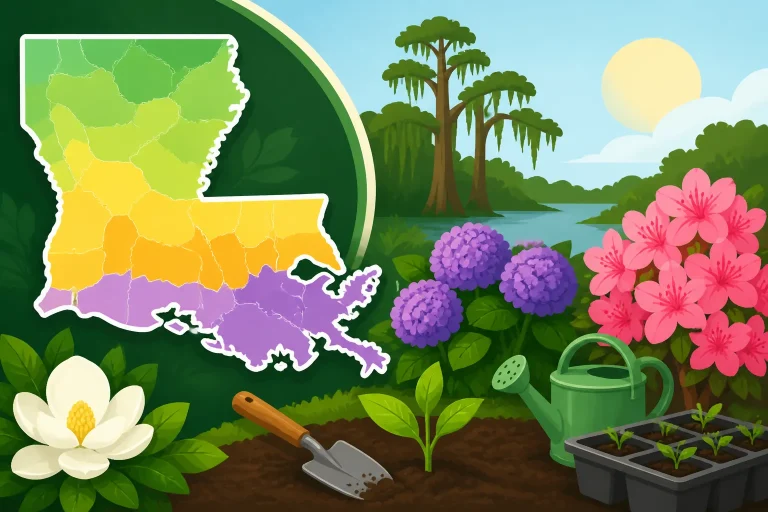
The USDA Plant Hardiness Zone Map describes average annual extreme minimum winter temperatures. The range in this article’s title, Zones 9A to 10A, is useful context for winter cold, but a hardiness zone is not a planting calendar. It does not tell you when your soil is warm enough for seeds, how long a crop needs to mature, or whether a late cold snap is likely in your garden. Use Louisiana USDA Hardiness Zones: Maps, Ranges, and ZIP Codes for more on what zones do and do not tell you.
A useful calendar combines several kinds of information:
- Season and temperature: Cool-season vegetables and warm-season vegetables have different comfort zones. The right planting window is often when temperatures are moving toward the crop’s preferred conditions, not simply when a month begins.
- Local frost risk: Tender plants can be damaged by a cold snap even in a mild-winter region. Compare local weather records and forecasts before setting out sensitive transplants. Using Freeze Odds to Choose Planting Dates Across Louisiana Stations explains why a date is a probability rather than a guarantee.
- Soil condition: Wet, compacted soil is a poor place to sow or transplant, even when the air feels pleasant. Wait until a bed drains and is workable.
- Days to harvest: Read the seed packet or plant tag, then allow for slower growth during stress. Louisiana Vegetable Days to Maturity and Sowing Calendar can help you use maturity estimates when planning succession crops.
- Your own yard: A sheltered bed near a building, an exposed coastal plot, and a low spot that stays wet can have different conditions, even if they are in the same general region.
The table below is a seasonal framework, not a set of guaranteed dates. Treat it as a starting point, then narrow the timing with local freeze information, soil warmth, and the directions for each crop.
| Garden period | Main opportunity | Crops and tasks to consider | Main caution |
|---|---|---|---|
| Late winter | Cool-season sowing and early bed preparation | Leafy greens, roots, peas, and other cool-season crops; prepare beds when soil is workable | Cold snaps and saturated soil can slow or damage young plants |
| Spring | Transition to warm-season vegetables | Tomatoes, peppers, beans, squash, cucumbers, and other warm-season crops as conditions suit them | Do not let a mild spell alone determine transplant timing |
| Summer | Heat-tolerant crops and garden maintenance | Okra, Southern peas, sweet potatoes, and continued care for productive crops | Heat, humidity, drought, and heavy rain can all stress plants |
| Late summer into autumn | Establish the fall garden | Sow or transplant cool-season crops as temperatures begin to ease; plan around maturity time | Starting too late can leave crops short of harvest time before a freeze |
| Winter | Continue suitable cool-season crops and protect tender plants when needed | Harvest greens and roots, maintain beds, and prepare for the next planting window | Mild winters still have variable cold events |
For parish-level context, compare this framework with Matching Your Louisiana Parish to Regional Planting Calendars. Regional calendars help identify broad differences, but your garden’s drainage, exposure, and local weather still matter.
Seasonal Windows for South Louisiana
Late winter: Start with cool-season crops
Late winter is a useful period for crops that prefer cooler growing conditions. Depending on local weather and bed conditions, gardeners may sow leafy greens, carrots, beets, radishes, peas, and other cool-season crops. Some can also be started in containers or trays and transplanted once they are sturdy enough and the bed is ready.
The challenge is not only cold. Winter and early spring rain can leave garden soil too wet to work. Tilling or digging saturated soil can compact it and damage its structure. If soil sticks heavily to tools or forms a slick, dense clump, give it time to drain. A raised row or bed can help in a site where water tends to linger, but it will not solve every drainage problem.
A brief warm spell is not a reliable signal that winter is over. Keep an eye on forecasts and local freeze records, especially for tender seedlings and transplants. Hardy crops may tolerate cool conditions better than tomatoes, peppers, or other warm-season plants, but young growth can still be vulnerable.
Spring: Move from cool-season crops to warm-season crops
As cold risk recedes and soil warms, the planting focus shifts to warm-season vegetables. Tomatoes, peppers, eggplants, beans, cucumbers, squash, melons, and okra are common choices for this transition. Planting too early can set them back: chilly soil and cool nights may slow roots and growth, even when the afternoon is warm.
The best window differs by crop. Beans and cucurbits can be sensitive to cold conditions, while tomatoes and peppers are commonly set out as transplants rather than sown directly into the bed. Use crop-specific guidance rather than assuming all warm-season vegetables should be planted on the same day. When to Plant Louisiana Warm-Season Vegetables provides a crop-by-crop starting point.
Spring is also a good time to prepare supports before plants become large. Set up tomato cages or other supports, plan paths for sprawling vines, and make sure irrigation can reach the full bed. Adding supports after a plant has spread can disturb roots or break stems.
Summer: Choose crops for the conditions, not just the calendar
Summer heat and humidity are major constraints in South Louisiana. Some vegetables keep growing, while others may flower poorly, drop blossoms, or produce less. Okra, Southern peas, and sweet potatoes are examples of crops often considered for hot-season conditions. Other warm-season crops may continue to produce if they were established earlier and remain healthy, but their performance can decline under prolonged heat.
This is a good time to keep harvests regular, remove badly damaged plant material, and pay attention to water. A plant that wilts in the hottest part of the day may be responding to heat, dry soil, root trouble, or a combination of factors. Check soil moisture before adding water rather than treating every wilt as a simple watering signal.
Summer is also the season to make a plan for the fall garden. Check how long each crop takes to mature, decide which beds will be available, and identify the point when declining spring crops will be removed. A fall planting may need to be started while summer weather is still hot, so seeds and seedlings may need extra attention as they establish.
Late summer and autumn: Build the second cool-season garden
The fall garden can be one of the most productive opportunities of the year, but the timing is easy to misjudge. Cool-season seeds may need to be sown while temperatures are still high enough to stress germination and young seedlings. Waiting until the weather feels cool can mean losing valuable growing time.
Plan backward from the likely harvest period. Use the maturity estimate on the seed packet or plant tag, then allow for slower growth during heat, cloudy weather, or other stress. Crops with a longer time to harvest need an earlier start than quick-growing greens or radishes. Louisiana Fall Vegetable Garden: Planting Between Summer and Frost and South Louisiana Long Growing Season: Extended Fall Planting Dates offer more focused planning for this season.
Autumn weather is not a fixed schedule. A late stretch of heat can slow or damage new seedlings; an early cold event can catch tender crops before they mature. Staggering some sowings can spread the risk and give you more than one harvest window.
Winter: Keep harvesting, but stay ready for cold
Many cool-season crops can provide harvests during mild winter periods, particularly when they are established before the coldest weather. Winter is also a good time to clear spent crops, maintain paths, and prepare beds for the next round of planting.
Do not assume every winter will be mild enough for unprotected tender crops. Cold air can damage plants, and frost pockets or exposed sites may be more affected than sheltered areas. Use forecasts and local conditions to decide whether to cover valuable plants or harvest tender produce ahead of a cold event. A cover can reduce exposure, but it does not make a plant invulnerable to severe or prolonged cold.
What to Plant by Crop Group
Cool-season leafy vegetables
Leafy greens are best planned for cooler parts of the year. Lettuce, mustard greens, collards, kale, and similar crops can be grown from seed or transplants, depending on the crop and the gardener’s preference. A few staggered sowings can provide a longer harvest rather than producing a single flush of leaves all at once.
Choose a site with good drainage and enough light for steady growth. In a warm fall, young seedlings may need more careful attention than established plants. In spring, increasing heat can make some greens bitter, tough, or prone to bolting. Harvesting outer leaves regularly can help you use plants while they are still in good condition, but it cannot overcome temperatures that are outside their preferred range.
For detailed timing across the state, see When to Plant Fall Greens, Kale, and Collards in Louisiana. If your yard has only partial sun, Growing Leafy Greens in Part Shade to Beat Midday Sun can help you think through placement and heat exposure.
Root crops and alliums
Carrots, beets, radishes, and similar root crops are generally planned for cooler windows. Direct sowing is often practical because root crops can be difficult to transplant without disturbing the root. Keep the seedbed evenly moist during germination, and break up clods or surface crusting that can obstruct small seedlings.
Radishes often mature sooner than carrots or beets, so they can fit into shorter gaps between larger crops. Carrots need a well-prepared seedbed with soil that does not form a hard crust over the seed. Thin crowded seedlings as needed so roots have room to develop. For crop-specific guidance, see When to Sow Carrots, Beets, and Radishes in Louisiana.
Garlic and onions have their own seasonal requirements and should not be treated as interchangeable with quick root crops. Their planting windows depend on the crop and planting material. See When to Plant Garlic in Louisiana Home Gardens for garlic planning, and use a dedicated onion calendar when growing onions from sets.
Tomatoes, peppers, and eggplants
These crops need warm conditions, but setting them out too early can lead to slow establishment. Start with healthy transplants and move them outdoors when local conditions suit the crop. A gradual transition from protected growing conditions to outdoor sun and wind can reduce transplant stress.
Give tomato and pepper plants adequate space and airflow. Dense growth, persistent leaf wetness, and humidity can favor disease problems. Water at the soil level when practical, remove badly affected leaves, and avoid crowding plants against structures or neighboring crops. Support plants early enough that stems are not forced into a tangled mass.
Summer heat can be a serious limitation for fruit set and plant health. A plant may remain alive but produce poorly when temperatures are unfavorable. Protecting Tomatoes and Peppers from Louisiana Summer Heat covers ways to reduce stress, while Why Tomato and Pepper Blossoms Drop in Louisiana Summer Heat explains why flowers can fail to develop into fruit.
Beans, peas, and other legumes
Bush beans and pole beans can be useful choices for warm-season planting, with timing adjusted to the available window and expected weather. Pole beans need support installed before vines become difficult to handle. Bush beans are more compact, but a single planting may produce over a shorter period than staggered sowings.
Peas are a different planning decision: some are suited to cooler periods, while Southern peas are commonly used as a warm-season crop. Check the crop identity carefully when reading a calendar or seed packet. “Pea” is not enough information to establish the right planting time.
For a longer harvest, sow some beans in successive intervals if the season and available bed space allow. Keep each sowing modest enough that you can harvest it regularly. More detail is available in Succession Planting Bush Beans and Greens in Louisiana Gardens.
Cucurbits, okra, and other warm-season crops
Cucumbers, squash, melons, and other cucurbits need warm conditions and room to grow. Choose a site with good drainage and enough space for the variety’s growth habit. Vining plants can be trained or allowed to spread, but make the decision before planting so they do not overwhelm paths or neighboring crops.
Okra is a strong candidate for a hot-season bed once conditions are warm enough. Harvest pods while they are at a useful size for cooking; older pods can become tough. Sweet potatoes also need a long warm period and space for their vines. Planting them in the right part of the garden can prevent them from covering smaller crops.
Corn requires room and a plan for pollination, so a small number of widely spaced plants may not perform as well as a block of plants. Before planting, compare the crop’s space needs with the bed you have available. Use Waiting for Warm Soil: Planting Okra and Cucurbits in Louisiana for more on why warm soil matters.
Choosing Dates Without Treating Them as Guarantees
Use local freeze information as a planning range
A last spring freeze or first autumn freeze is not a dependable date on the calendar. Freeze records are based on past weather observations and probabilities; weather can fall outside the usual pattern. A date with a particular probability does not promise that frost will or will not occur on that day.
Use local weather station records as a risk tool. Check more than one station if your garden sits between climate areas or differs noticeably from the nearest station in elevation, exposure, or proximity to water. The coastal environment can moderate some temperature swings, but it does not eliminate the possibility of cold events.
For tender crops, use a conservative approach when a cold forecast is possible. For fall crops, count backward from an estimated first freeze while leaving a buffer for slower growth and uncertain weather. Local Freeze Windows: Tracking Frost Dates Across Louisiana Stations and First and Last Freeze Dates at Louisiana Weather Stations explain how to interpret station-based information.
Account for maturity time and transplant recovery
The number of days listed to maturity is an estimate, not a promise. It may count from sowing or from transplanting, depending on the crop and the seed or plant information. Check what the label means before using the number in a schedule.
A transplant also needs time to recover after planting. A plant that pauses after a move, suffers root damage, or faces heat stress may not follow the maturity estimate closely. Direct-sown crops can also take longer than expected if the bed dries, crusts, or stays cold.
For fall crops, ask three questions before you plant:
- How long is the expected time from sowing or transplanting to harvest?
- How many growing days are likely to remain before cold becomes a concern?
- Will the plant be established during the hottest part of the year, and can you protect it from stress?
If the answer to the last question is uncertain, consider starting seedlings in a sheltered spot or choosing a crop with a shorter maturity estimate. That does not remove weather risk, but it can make the timing more manageable.
Use soil temperature and moisture, not air temperature alone
Air temperatures can rise quickly on a sunny day while the soil remains cool. The reverse can happen in summer, when soil remains warm even after an evening cool-down. Seeds and roots respond to the conditions around them, not just the afternoon forecast.
Do not sow into ground that is waterlogged or compacted. In damp soil, seeds may fail to emerge evenly and roots may struggle. If a garden bed dries unevenly, add organic matter to improve structure over time, and avoid working the soil when it is saturated. Louisiana Soil Preparation and Fertility for Garden Crops offers broader advice on preparing planting beds.
Preparing Beds and Managing Louisiana Weather
Drainage comes before a perfect planting date
Heavy rain can quickly change a planting plan. A bed that drains slowly may stay saturated after a storm, while a nearby raised row dries sooner. Observe where water collects after rain and whether it disappears promptly. If one part of the garden stays wet, place crops that dislike soggy roots elsewhere rather than trying to force the same schedule across the whole yard.
Raised beds and rows can improve drainage in some gardens, but their height and construction should fit the site. A raised bed can also dry faster during hot, sunny weather, so it may need closer moisture checks. Avoid piling soil or mulch against plant stems, where persistent dampness can contribute to problems.
Keep walkways clear enough that you can reach the bed after rain without walking on planting soil. Repeated foot traffic compresses soil and makes drainage and root growth worse. If space is limited, a compact layout with narrow beds and defined paths can make maintenance easier.
Keep soil covered and water deliberately
Mulch can reduce evaporation, moderate soil temperature, and limit weeds. Apply it without burying seedlings or covering plant crowns. The right material and depth depend on the bed and crop, so follow reliable crop-specific recommendations rather than treating every planting area alike.
Water needs change with weather, plant size, soil type, and container or bed design. A newly sown bed needs moisture near the seed; established plants generally need water to reach their active root zone. Frequent shallow watering can leave deeper roots dry, while watering already saturated soil can worsen root stress.
Check the soil before watering. Push a finger or a small tool into the bed to see whether moisture is present below the surface. In containers, check more often because the root area is limited and may heat up quickly. Do not rely on a fixed routine through changing rain and heat; adjust to what the soil and plants show.
Plan for heat, humidity, and heavy rain
South Louisiana gardens can face several stresses at once. Heat raises water demand, humidity can keep foliage wet, and intense rain can wash soil or nutrients from beds. A practical garden layout makes these problems easier to manage:
- Leave space for airflow around plants and between rows.
- Use supports that keep fruit and foliage off wet soil where suitable.
- Keep paths and drainage routes clear.
- Harvest ripe produce promptly, especially when prolonged wet weather is expected.
- Remove fallen or diseased plant material rather than leaving it tangled among healthy plants.
- Check plants after storms for broken stems, exposed roots, and soil washed from the bed.
Shade can help protect some crops during the hottest part of the year, but too much shade may reduce growth and fruiting. Use shade where it addresses a specific heat problem, and make sure the crop still receives appropriate light. When to Install Shade Cloth Over Louisiana Vegetable Beds provides more context for deciding when shade may be useful.
Watch for pests and disease without relying on a calendar spray
Warm, humid conditions can favor a range of garden pests and diseases, but a calendar alone cannot identify what is affecting a plant. Check leaves, stems, and fruit regularly. Look for patterns: damage on new growth, spots that expand after wet weather, insects on the underside of leaves, or symptoms concentrated in one area of a bed.
Start with accurate identification before choosing a response. Removing affected leaves, improving airflow, and correcting water stress may help in some situations, but they will not solve every disease or pest problem. For any pesticide, follow the product label, which is the legal instruction for use. If symptoms are unfamiliar or spreading, ask a qualified local gardening professional or contact the appropriate extension office through its official website.
Beyond Vegetables: Flowers, Trees, and Containers
A planting calendar can also help with landscape plants, but their priorities differ from annual vegetables. Trees and shrubs need time to establish roots, and planting into saturated ground or during severe heat can make establishment harder. Choose a season that gives roots a reasonable opportunity to grow before the plant faces its next major stress.
Match each plant to the site’s sun, drainage, and mature size. A plant suitable for a sunny, well-drained bed may fail in a low area that stays wet. Before planting, observe the site through different parts of the day and after rain. Matching Plants to Soil, Light, and Moisture in Louisiana offers a useful framework for that decision.
For containers, remember that pots heat and dry differently from in-ground beds. A small container can become stressful for roots during hot weather, while a pot that holds too much water can keep roots oxygen-starved after rain. Choose a container suited to the crop, provide drainage, and check soil moisture more frequently than you would in a garden bed. Managing Louisiana Container Plants Through Extreme Heat and Freezes covers seasonal container concerns.
Flowers also benefit from being matched to the season. Cool-season flowers provide color when summer heat is less intense; heat-tolerant choices are better suited to the warmest months. Check the plant tag for light and moisture needs, and give new plants time to establish before expecting strong growth or bloom. When planning a mixed garden, avoid placing a tall, sprawling crop where it will shade a smaller plant that needs full sun.
Frequently Asked Questions
Can vegetables grow through winter in South Louisiana?
Some cool-season vegetables can continue growing or be harvested through mild winter periods, but growth may slow and cold events can cause damage. Choose crops suited to cool weather and be prepared to protect or harvest tender plants when a cold forecast warrants it.
Does Zone 9A to 10A tell me when to plant vegetables?
No. Hardiness zones describe average annual extreme minimum winter temperatures. They do not provide exact spring or autumn frost dates, soil temperatures, or crop-specific planting windows. Combine zone information with local freeze records, soil conditions, and crop guidance.
When should I start a fall vegetable garden?
Plan backward from the harvest you want and the crop’s estimated time to maturity. Many fall crops need to be started while summer weather is still warm. Check crop-specific calendars, leave room for slower growth, and adjust for local freeze risk.
Why do spring-planted vegetables stop producing in summer?
Heat can interfere with flowering, fruit set, and plant growth, while humidity, drought, or heavy rain can add stress. Some crops tolerate hot conditions better than others. Choose heat-suitable crops for summer and protect spring crops from avoidable stress where possible.
Disclaimer
This article is for general informational purposes only and does not constitute professional advice. Laws, prices and regulations vary by location and change over time. Consult a qualified professional for guidance on your specific situation. Louisiana Gardening Guide is not a government agency and is not affiliated with any university extension, state department of agriculture or other government agency.